


In response to rising cybersecurity threats, a group of eight small and medium-sized enterprises (SMEs) across Suffolk and Essex have successfully completed the Cyber Innovate to Elevate (CItE) programme, delivered by Freeport East in partnership with the University of Essex, and funded by Innovate UK.
The successful completion of the programme was marked yesterday [12 March], with a celebration and knowledge-sharing event at Wivenhoe House Hotel, bringing together participating SMEs, regional business leaders, cybersecurity specialists, students and partners. The event highlighted the strong appetite across the region for improving cyber resilience and strengthening digital capability.
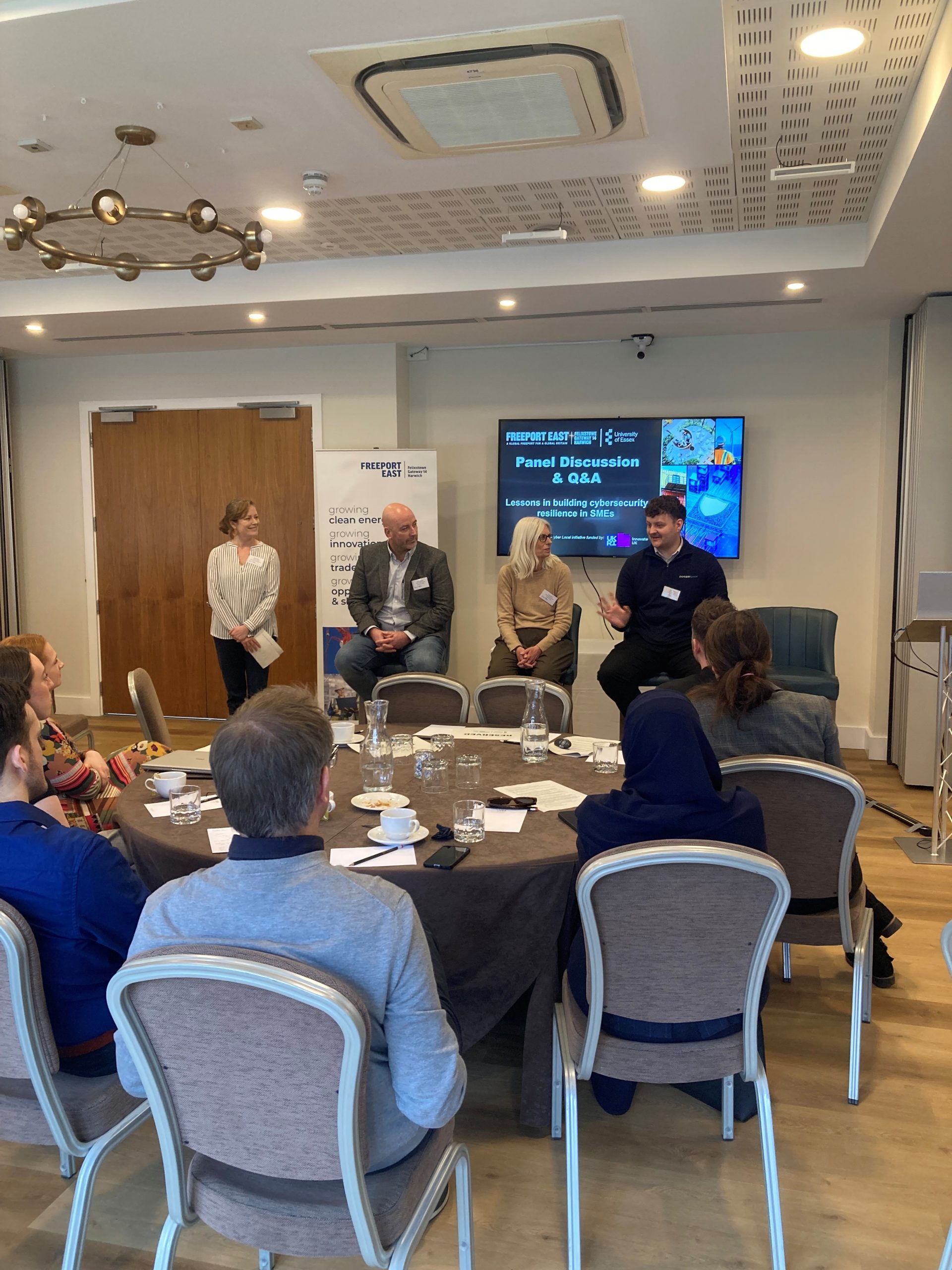
Speakers included representatives from the University of Essex, Freeport East and the Department for Science, Innovation and Technology, alongside a panel discussion featuring participating businesses including Curtis Machine Tools, Portable Space, and Bows and Arrows Group.
The CItE programme was created to help SMEs respond to rising cyber threats by building practical skills, improving governance and embedding stronger cyber resilience across their organisations. Since launching in September 2025, the programme attracted over 150 expressions of interest, resulting in 42 one-to-one ideation sessions with businesses and 8 projects receiving funding. Participating businesses have worked closely with cybersecurity specialists from the University of Essex to address the risks aligned to their systems, sector and regulatory environment.
The fully funded consultancy projects supported SMEs operating in sectors including manufacturing, education, construction training and specialist services – all areas facing increasing cyber risk and growing compliance requirements. Strengthening cyber defences is also increasingly critical to commercial growth, as major procurers such as Sizewell C, other large infrastructure owners, and the public sector place ever-greater demands on their supply chains to demonstrate robust cybersecurity credentials. The CItE programme has directly supported participating businesses to address these expectations, enhancing their competitiveness and opening new commercial opportunities.
Each participating organisation undertook a tailored consultancy project designed around its specific challenges and operational context.
Completed projects included:
- Curtis Machine Tools (Colchester, Essex), which focused on developing a comprehensive cybersecurity framework and an actionable plan to safeguard technology, people, and reputation while enabling secure growth.
- Portable Space (Bacton, Suffolk), which worked with the University of Essex team on a three-month project to review and enhance cybersecurity practices, including a comprehensive audit of systems and processes, focusing on governance, access controls, and staff awareness.
- Construction Training Services (Needham Market, Suffolk), which received support to conduct a comprehensive cybersecurity readiness audit to review its systems and processes, identify risks, and develop practical measures to protect data and maintain compliance.
Additional SMEs operating in specialist environments also completed projects, each benefiting from bespoke advice, audits and practical guidance aligned to their operational needs.
Beyond technical improvements, the programme has helped participating SMEs build a stronger understanding of cyber risk, embed better cyber practices across their teams, and increase confidence in managing and responding to cyber threats. Given the significant demand seen throughout the programme, Freeport East and the University of Essex are now exploring how to continue the programme beyond the now completed Innovate UK Cyber Local 2025-26 initiative and help more businesses across the region benefit from this support.

Steve Beel, CEO at Freeport East, said: “Cybersecurity is no longer a specialist concern, but a fundamental business priority and something we should all be aware of. Through Cyber Innovate to Elevate, we’ve been able to give local SMEs practical, tailored support that strengthens their resilience and protects their future growth.
“By investing in digital capability and resilience today, we are helping to build a stronger, more competitive regional economy for tomorrow. The demand we have seen confirms there is much more to do, and we are already exploring how to scale this programme further.”
Marta Fernandez de Arroyabe, Deputy Director of the Institute for Analytics and Data Science (IADS) and Reader at Essex Business School, added: “It has been incredibly rewarding to lead Essex’s academic team on this project and work directly with such diverse local businesses. Through the CItE programme, we approached cybersecurity not merely as an IT issue, but as a holistic, socio-technical challenge. Rather than pushing ‘off-the-shelf’ products, we sat down with leadership and staff in interviews and validation workshops to truly understand their unique operational constraints, human factors, and organisational cultures.”
“This collaborative process allowed us to co-design lightweight, affordable frameworks that actively align technology with human behaviour and strategic governance. Whether we were empowering teams with targeted training, safely managing the realities of shared accounts, or establishing clear oversight of outsourced IT providers, our goal was always to build genuine, lasting resilience that is practical and proportionate for these SMEs to maintain.”
Pam Cox, MP for Colchester, continues, “Cybersecurity is a core part of how businesses grow and succeed. The partnership between Freeport East, the University of Essex and local SMEs shows the power of collaborative innovation in strengthening our region’s economy and safeguarding the businesses that underpin it. Ensuring that local businesses have the tools and expertise to protect themselves from cyber threats is essential for a thriving, competitive regional economy.”
The successful completion of the Cyber Innovate to Elevate programme highlights the impact that collaboration between industry, academia and public funding can have in addressing critical challenges facing SMEs.
Crucially, stronger cyber defences also translate directly into commercial opportunity, allowing businesses to satisfy the growing requirements of major procurers and position themselves competitively for contracts across the public sector and large-scale infrastructure projects.
